Month: May 2026

Home / Month: May 2026

Property clearance services have become an important part of modern business operations and real estate management. As businesses expand, relocate, renovate, or reorganize their spaces, the need for fast and professional property clearance continues to grow.

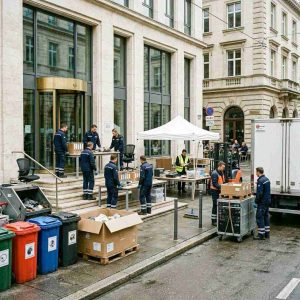
Property clearance (source: Objekträumung) involves removing furniture, equipment, waste materials, old inventory, household belongings, and unwanted items from residential or commercial properties. While many people associate clearance services with simple cleanup work, these services actually support larger business goals connected to efficiency, property turnover, and workplace organization.

Commercial buildings, offices, apartments, warehouses, and retail spaces all require organized property management to remain functional and profitable. Delays caused by clutter, abandoned items, or outdated equipment can slow down renovations, leasing, and business operations.

Professional property clearance companies help businesses and property owners prepare spaces quickly and responsibly. In a fast-moving city like Vienna, efficient property clearance plays an important role in supporting real estate activity, commercial growth, and modern urban development.

Why Businesses Need Professional Property Clearance

Businesses constantly evolve. Companies move offices, renovate commercial spaces, upgrade equipment, or close locations depending on operational needs. During these transitions, unwanted furniture, outdated technology, storage materials, and large amounts of waste often accumulate.

Handling these items internally can be time-consuming and physically demanding. Employees are usually not trained for large-scale clearance work, and businesses may not have the transportation or disposal systems required to manage bulky waste properly.

Professional property clearance companies solve this problem by providing organized and efficient removal services. Their teams handle sorting, lifting, transportation, recycling, and disposal, allowing businesses to focus on daily operations instead of cleanup logistics.

Office relocations are one of the most common examples. Before moving into a new workspace, companies often need to remove old desks, filing cabinets, electronics, chairs, and storage equipment. Professional clearance services help complete this process quickly so businesses can minimize downtime.

Retail businesses also rely on property clearance during store renovations, inventory changes, or branch closures. Fast clearance allows renovation work and property preparation to begin immediately.

Property developers and real estate companies benefit as well. Cleared spaces are easier to renovate, market, and lease. Empty properties appear larger, cleaner, and more attractive to potential tenants or buyers.

For commercial landlords, efficient property clearance helps reduce vacancy periods between tenants. Faster property turnover supports better rental income and smoother building management.

The Importance of Responsible Waste Management in Business

Modern businesses are under increasing pressure to follow environmentally responsible practices. Waste management is now an important part of corporate sustainability goals.

Professional property clearance services in Vienna help businesses meet these expectations by handling disposal responsibly. Many companies separate recyclable materials, electronics, furniture, and reusable goods according to local waste management regulations.

Vienna has strict recycling and disposal systems, especially for electronics, office equipment, and bulky waste. Professional clearance providers understand these regulations and ensure materials are processed correctly.

Recycling and donation also play an important role in reducing unnecessary landfill waste. Functional office furniture, shelves, chairs, and equipment may be donated or reused whenever possible. This supports sustainability efforts while helping businesses reduce environmental impact.

Responsible property clearance also improves workplace safety. Cluttered storage rooms, abandoned equipment, and overcrowded workspaces increase the risk of accidents and reduce productivity. Removing unnecessary items creates cleaner and safer working environments for employees.

Construction and renovation projects also benefit from organized waste removal. Professional teams help maintain safer job sites by clearing debris and unwanted materials efficiently.

Businesses that prioritize organized and sustainable property management often strengthen their professional reputation as well. Clients, employees, and investors increasingly value companies that demonstrate environmental responsibility and operational efficiency.

How Property Clearance Supports Real Estate and Urban Development

Property clearance plays a major role in Vienna’s growing real estate market. Residential and commercial properties constantly change ownership, usage, or occupancy. Efficient clearance services help support this movement by preparing spaces for the next stage of development.

Apartment buildings, office spaces, retail units, and mixed-use properties often require clearing before renovations or new occupancy. Delays in cleanup can slow down entire real estate projects and increase operational costs.

Professional property clearance teams help accelerate these processes by removing unwanted items quickly and safely. This allows contractors, interior designers, and property managers to begin work without unnecessary delays.

Urban development also depends on efficient property management systems. As cities become more crowded, available space becomes increasingly valuable. Clearing unused or neglected properties helps improve neighborhood appearance, increase property usability, and support economic activity.

Property clearance is especially important during redevelopment projects involving older buildings. Many older properties contain outdated furniture, storage materials, damaged appliances, or abandoned belongings that must be removed before renovation can begin.

Families and homeowners also benefit from professional property clearance during major life changes such as downsizing, inheritance situations, relocation, or renovation projects. Having experienced support helps reduce stress while ensuring the process remains organized.

Choosing the right property clearance company in Vienna is important for both businesses and private property owners. Reliable providers offer transparent pricing, responsible disposal practices, professional communication, and efficient project management.

As Vienna continues to grow and modernize, property clearance services remain closely connected to business efficiency, sustainability, and urban development. These services support cleaner workspaces, faster property turnover, and more organized real estate operations throughout the city.

For many businesses and property owners, professional property clearance is not simply about removing unwanted items. It is about creating opportunities for growth, improving operational efficiency, and preparing spaces for the future.
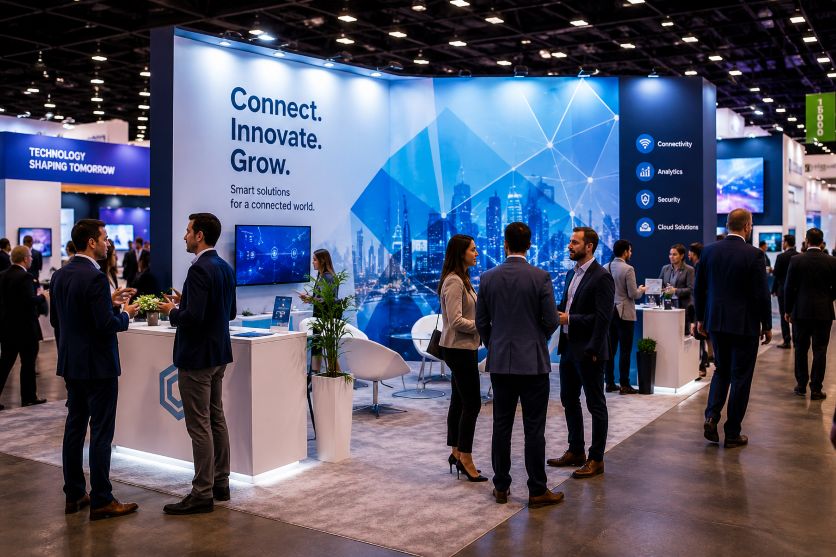

The Event Marketing Institute has reported that many consumers are more likely to remember brands after participating in live experiences rather than seeing traditional advertisements alone. That pattern reflects a larger change in how businesses compete for attention. People scroll through social feeds, pass digital billboards, and see advertisements throughout the day. Visibility remains important, yet visibility alone does not always stay in memory.

Businesses increasingly create short-term environments where people can interact with products, visuals, and ideas. Trade shows, launch events, branded installations, and conference booths have become spaces where organizations shape experiences rather than simply display messages. Industry examples involving backdrop printing NYC illustrate how temporary visual environments are often used as one element within larger event settings to create a recognizable identity for visitors moving through these spaces.

Modern trade show environment

Why Traditional Advertising Faces New Challenges

Advertising has long played a central role in business growth. Television campaigns, print advertisements, radio placements, and digital banners continue to influence awareness. Despite their importance, modern audiences face a different environment than previous generations.

McKinsey & Company has observed that consumers now move between multiple channels and devices throughout the day. Attention becomes fragmented when people divide time between phones, computers, streaming services, and physical environments. Businesses therefore compete within crowded spaces where messages appear constantly.

Repeated exposure can increase familiarity, but repetition alone does not guarantee strong recall. A person may see dozens of advertisements during a commute and remember very few later that evening. These challenges underscore an important issue. Visibility and memory are connected, yet they are not identical.

Traditional advertising often creates passive interactions. Someone may see a logo or a message for several seconds and then move on. Temporary branded environments attempt to solve a different problem. They seek to place people inside an experience rather than asking them to observe from a distance.

How Temporary Brand Spaces Create Different Experiences

Temporary spaces appear in many forms. Some exist for one afternoon while others operate for several weeks. Pop-up stores, trade show booths, conference displays, and product launch events all belong to this category.

These environments create opportunities for interaction. Visitors may test products, walk through designed spaces, take photographs, participate in demonstrations, or engage in conversations. The goal is often less about immediate selling and more about creating memorable moments.

Harvard Business Review has discussed how customer experiences can shape long-term perceptions and emotional connections with brands. Human memory frequently responds to environments involving multiple senses. Visual design, movement, sound, and participation may contribute to stronger impressions than a static message viewed briefly.

Consider a technology conference where dozens of companies share the same exhibition hall. Every organization competes for attention under similar conditions. One booth might rely on a simple sign and table setup. Another may create an interactive environment using lighting, coordinated colors, display walls, and visual presentation elements that encourage visitors to stop and engage.

The difference extends beyond appearance. The environment itself becomes part of the communication process.

The Role of Physical Space in Memory Formation

Environmental design influences how people process information. Researchers in environmental psychology have long examined relationships between surroundings and human behavior.

The American Psychological Association has highlighted research suggesting that physical environments can affect attention, emotions, and memory. People often associate experiences with places. A product demonstration seen inside a visually organized space may become easier to remember than a product image viewed during routine browsing.

Several elements frequently appear across temporary branded environments:

  • Consistent color themes
  • Large visual displays
  • Graphic walls and printed installations
  • Interactive spaces
  • Photo opportunities
  • Clear visual storytelling

These features work together to create context around a brand message. Instead of seeing isolated information, visitors experience connected visual cues.

Businesses have increasingly adopted event graphics, branded display walls, and portable visual systems as practical tools within these environments. Large visual backgrounds can define space boundaries and create consistency within temporary settings where organizations have limited time to communicate identity.

Temporary Does Not Mean Short-Lived Impact

Temporary spaces may sound limited because they exist briefly. However, their effects sometimes continue after an event ends.

People frequently photograph experiences and share them through social media channels. A visitor may attend a conference booth for ten minutes and later post images that continue circulating online. One temporary installation can therefore create additional exposure beyond the original event.

Pew Research Center data indicates that visual content continues to play a major role in digital sharing behavior. Images often become part of broader conversations that extend beyond physical locations. Broader discussions around digital strategies and business growth patterns also show how organizations increasingly connect in-person experiences with online engagement. Businesses are no longer treating physical and digital communication as separate efforts. Instead, they often use each channel to strengthen recognition across multiple customer touchpoints.

Businesses increasingly understand this relationship between physical experiences and digital reach. A temporary installation may create direct interactions for attendees while generating additional visibility through shared content.

Despite changing technologies, people still respond strongly to environments that feel tangible and personal. Walking into a space creates a different experience from scrolling through a screen. The interaction feels more immediate because it involves movement and participation.

Looking Beyond Traditional Visibility

Businesses continue to rely on advertising across many channels, and traditional methods remain important within larger marketing strategies. Yet the growing use of temporary spaces suggests that organizations increasingly value experience as part of recognition building.

Trade show displays, visual presentation systems, branded event backgrounds, and large-format graphics represent more than decorative elements. They help shape how people experience a message and remember it later. The purpose extends beyond attracting attention for a few seconds.

Recognition increasingly depends on creating environments people remember after they leave. Temporary spaces reveal a broader shift in business communication, one where visual identity tools and event display solutions contribute to lasting impressions. Although the structures themselves may disappear after an event ends, the memory attached to those experiences can remain much longer.

Mid-sized firms may seem to be easily overlooked entities. But, they may very well prove themselves to be more agile and flexible when reacting to changing market conditions. This flexibility extends to the utilization of resources, and gives them a competitive advantage. As the economy changes, these organizations are becoming a bigger voice in the business world’s evolution and in business growth strategies.

Agility Turning Ideas Into Action

Mid-size companies tend to have fewer organizational levels compared to larger companies. This helps decision-makers to take quick action on marketing opportunities and feedback from customers. Quick action makes companies more competitive in rapidly changing sectors.

Innovation: Thriving by Collaboration

Many expanding organizations are promoting a good level of synergy between departments and teams. Employees tend to work together to solve problems and find creative solutions in different functional departments. The process of collaboration may prove very useful in developing innovations and ideas.

Customer Feedback: Guiding Strategic Planning

Any successful business can’t miss out on learning customer needs and preferences. Smaller companies may have the opportunity to connect with their clients in a more intimate manner than bigger firms. This knowledge enables the development and future planning of the product.

Increasing Markets by Judicious Growth

Growth companies continually review and assess market and segment opportunities. Expansion is a strategic process that must be planned and resource shared. Careful execution and ambition give rise to sustainable success in business.

There is no doubt that mid-sized companies are still making a difference as engines of innovation and as drivers of economic development.

Professional cleaners working on hotel sofas

Research shows that furniture replacement accounts for a significant portion of operational expenses in hospitality and office environments. The American Hotel & Lodging Association notes that hotels typically refresh their furniture every seven to ten years, a cycle that can cost millions depending on property size. Yet, many of these costs are avoidable when upholstery is treated as an asset to be maintained rather than a disposable item.

Businesses that prioritize Upholstery care and stain removal (العناية بالمفروشات وإزالة البقع) often see measurable improvements in customer perception and operational efficiency. This shift in perspective reframes cleaning services as a strategic investment, not a commodity expense.

Cost Comparison: Replacement vs. Maintenance

Replacing a sofa in a mid-range hotel can cost anywhere from $800 to $2,000 per unit. Multiply that across dozens of rooms, and the expense quickly escalates. By contrast, professional upholstery cleaning averages $100 to $150 per piece, depending on fabric type and condition. Data from ISSA, the worldwide cleaning industry association, indicates that regular maintenance can extend furniture lifespan by 30 to 50 percent. This means a sofa that might otherwise need replacement in seven years could last ten or more, saving thousands in cumulative costs.

For office spaces, the financial logic is similar. A corporate lobby with ten high-quality chairs may represent an investment of $15,000. Routine cleaning and fabric protection treatments can preserve this investment, delaying replacement cycles and reducing capital expenditure.

Preserving Brand Image and Customer Trust

In hospitality and rental properties, furniture is more than functional; it communicates brand identity. Stained or worn upholstery sends a negative signal to guests, undermining perceptions of cleanliness and care. A survey by J.D. Power found that cleanliness is one of the top three factors influencing guest satisfaction in hotels. Maintaining fresh, well-kept furniture directly supports this metric.

Case in point: A boutique hotel in Barcelona reported a 12 percent increase in repeat bookings after investing in quarterly upholstery cleaning. Guests cited the “fresh and inviting atmosphere” as a reason for returning. Similarly, property managers of furnished rental apartments in Dubai have noted that well-maintained sofas and chairs reduce tenant turnover, as renters associate clean interiors with professional management.

The Role of Specialists and Safe Materials

Not all cleaning is equal. Trained specialists understand the chemistry of fabrics, ensuring that delicate materials like velvet or linen are treated without risk of discoloration. The Institute of Inspection Cleaning and Restoration Certification (IICRC) emphasizes that improper cleaning can permanently damage fibers, leading to costly replacements. Professional services use pH-balanced solutions and advanced extraction methods that remove dirt while preserving fabric integrity.

Beyond technical skill, safe cleaning materials reduce liability. In office environments, harsh chemicals can trigger allergies or respiratory issues among employees. Eco-friendly solutions mitigate these risks, aligning with corporate sustainability goals and enhancing workplace health.

Bundling Services for Greater Efficiency

Property owners often overlook the economies of scale available through bundled cleaning services. Upholstery maintenance can be integrated with carpet, curtain, and rug cleaning, creating a comprehensive care package. This approach reduces scheduling complexity and ensures consistency across all interior surfaces.

For example, a serviced apartment operator in Singapore partnered with a cleaning provider to manage sofas, carpets, and drapes under a single contract. The bundled service reduced annual costs by 18 percent compared to hiring separate providers. More importantly, it streamlined vendor management, freeing staff to focus on tenant relations and operational priorities.

Mini Case Examples Across Sectors

  • Hospitality: A mid-sized hotel in Toronto extended its furniture replacement cycle from seven to eleven years through biannual upholstery cleaning. The savings funded lobby renovations, which further boosted guest satisfaction scores.
  • Rental Properties: A property management firm in Riyadh reported fewer tenant complaints and longer lease renewals after implementing a structured upholstery maintenance program. Clean interiors became a differentiator in a competitive rental market.
  • Corporate Offices: A financial services company in London invested in quarterly upholstery care for its client-facing areas. Executives noted that the pristine environment reinforced their professional image, supporting brand credibility during high-stakes meetings.

Why Upholstery Maintenance Is a Strategic Decision

Despite the importance of aesthetics, upholstery care is often dismissed as a minor operational detail. However, growing industry discussion around the hidden ROI of investing in an upholstery cleaning service highlights how preventive maintenance can reduce long-term operational costs while improving workplace presentation and customer perception. By aligning financial planning with maintenance strategies, property owners can transform cleaning from a reactive cost into a proactive value driver.

Experts note that asset management is not limited to machinery or real estate. Furniture, though often overlooked, represents a tangible investment that influences customer experience and employee well-being. Treating upholstery maintenance as part of a broader asset strategy ensures that properties remain competitive, attractive, and financially efficient.

Conclusion

From hotels to rental apartments and office spaces, the evidence is clear: upholstery maintenance is not a household chore but a business imperative. Professional cleaning extends fabric lifespan, safeguards brand image, and reduces operational risks. Whether through bundled services or targeted stain treatment, investing in fabric care delivers measurable returns. Businesses that embrace upholstery preservation as a strategic priority position themselves for long-term success, proving that fresh interiors are as much about financial prudence as they are about aesthetics.

In the end, thoughtful fabric maintenance, whether described as upholstery preservation, textile care, or stain treatment, represents a smart investment for property owners seeking to balance cost efficiency with customer satisfaction.

𐌢